

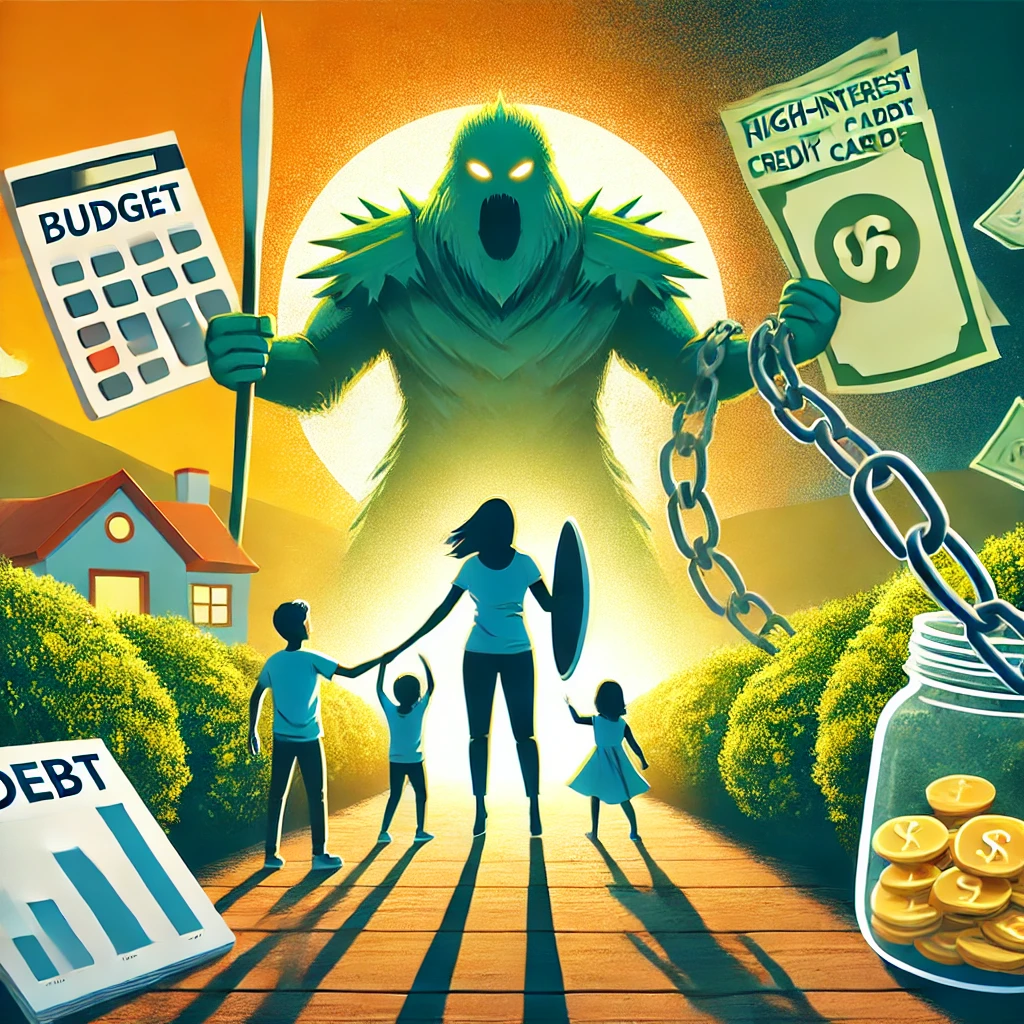
Being a stay-at-home mom is an incredibly rewarding role, yet it comes with its own set of challenges—for now we will focus on financial ones. Many of us are managing the household finances while trying to remain at home to nurture and support our families. Tackling debt can sometimes feel like grappling with a monster, but rest assured, there are smart, strategic ways to slay this beast. Let’s walk through this journey together, keeping in mind both the potential good in certain debts and the personal growth that this process can bring. Let’s face the debt monster.
Understanding Good vs. Bad Debt: A Necessary Distinction
Just like there are no-one-size-fits-all parenting styles, the same goes for handling debt. Some debt can be beneficial, aiding our long-term goals, while other debt is better left undone. It’s essential to recognize which is which when strategizing your personal finance plan.
A home mortgage with favorable terms or a business loan with a solid expansion plan can be considered “good” debt because they’re investments in your future. Conversely, high-interest credit card debt and other consumer credit should be avoided or minimized. As my husband always stresses, it’s crucial to separate the wheat from the chaff.
He also emphasizes that any debt above the prime rate should be scrutinized, unless it is temporary and will transition into more favorable terms. Credit card balances, store lines of credit, and using a HELOC as if it were a credit card are all part of the “bad debt” category. They can disturb your peace of mind and impact your ability to sleep better at night.
Starting the Personal Finance Journey: Setting the Stage
Embarking on this journey of getting out of debt is much like the start of a new chapter in life. It’s an opportunity for personal growth, a chance to transform not only how you manage finances but also how you perceive money. Think of it as planting seeds for your family’s financial future.
The first step involves taking stock of your existing debts and categorizing them as good or bad. Understand the interest rates and how much you’re losing—or potentially gaining—over time. This assessment will be the foundation upon which your entire debt management strategy rests.
Using anecdotes from other moms can be particularly helpful. I remember chatting with a friend who managed to transform her financial situation through discipline and smart planning. Her story of turning chaos into clarity inspired me to pursue my financial goals with much more confidence and determination.
Two-Pronged Approach: Consolidate and Conquer
While there are numerous strategies out there, I believe in a focused, two-pronged approach: debt consolidation paired with disciplined payoff strategies to face the debt monster. If your credit is in decent shape, consider consolidating high-interest debt into a lower-interest one or using low/0% balance transfer options. This shouldn’t be an excuse to spend more, but rather a tool to channel more funds into debt repayment.
The beauty of debt consolidation is that it simplifies your financial scenario. Instead of juggling various payments, you can focus on a single or fewer accounts, making it easier to stay on top of your financial obligations.
Next comes discipline. Redirect the money you save from lower interest rates towards paying off the consolidated debt faster. Keep tackling those high-interest debts first before they accumulate even more burdening interest. One mother I know used this method, and the relief she felt afterward was palpable. Knowing she had this buffer allowed her to sleep better at night, free from the anxiety of mounting bills.
The Power of the Snowball: It’s All About Momentum
Once you’ve begun chipping away at your debts and face the debt monster, it’s time to put the snowball method into action. As you clear smaller debts, use the freed-up cash to continue tackling the next one. The idea is to gain momentum, reinforcing good financial habits that will lead to long-term stability.
This method fosters a sense of achievement. By witnessing your progress, no matter how small, you stay motivated to continue pressing forward. The initial hurdles might seem significant, but by the time you arrive at larger debts, you’ll possess confidence and clear strategies to tackle them head-on.
From personal experience, I found that seeing smaller victories made the larger goals seem much more achievable. It’s like watching your children take their first steps—progress builds with each moment of success.
Stop at “Good Debt” and Invest in Peace
When you’ve managed to clear out all the “bad” debt, take a breath. If you’re left with only good debt, such as a mortgage or a low-rate auto loan, it’s okay to pause. Understanding that not all debt is detrimental allows you to invest your resources wisely.
Instead of funneling every spare penny into more repayments, consider investing. Set up an emergency fund that can cushion your household in case of unexpected financial events. Begin contributing to your or your spouse’s 401K, especially if the employer matches contributions. This step is vital, as you’re investing in your future stability and peace of mind.
In the end, the goal isn’t just to face the debt monster and be free of debt but to enter a state of financial neutrality where you’re no longer drowning, but comfortably afloat. This will give you the breathing room you—and your family—need.
The Path Forward: Building Your E-Fund
The final piece of this initial financial puzzle is constructing a cushion, the emergency fund. This fund will act as a life jacket in turbulent financial seas, providing the security to not just survive but to thrive.
Bear in mind that the journey to financial freedom is ongoing. It requires continuous learning, adaptability, and above all, a mindset shift towards growing and nurturing your financial health. We’ll delve deeper into how to build that emergency fund in our upcoming discussions, but for now, rest easy knowing you’ve already made significant strides on this journey.
Step by step, together we are shaping a future filled with security, growth, and empowerment for ourselves and our families. So brace yourself for next time, when we continue this personal finance journey by focusing on emergency funds to help you sleep better at night.