
Flexible and Profitable: The Ultimate Guide to Work-from-Home Jobs for Moms

In today’s digital age, more mothers are seeking flexible job options that allow them to work from home. Whether you need extra income or desire the freedom to manage your own hours, numerous side jobs cater specifically to moms. Below, we explore the best opportunities that not only align with your lifestyle but also offer competitive pay and significant flexibility.

1. Freelance Writing: Your Way with Words

Freelance writing stands out as a premier option for mothers yearning for flexibility. You can choose topics that you’re passionate about, from parenting to lifestyle, which can make writing less of a chore and more of a joy. The beauty of freelance work is that you decide when and where to write.

Platforms like Upwork and Fiverr abound with opportunities for writers. Notably, the pay can vary based on your experience and the niches you explore. As you build more of a portfolio, you’ll find that higher-paying gigs quickly become available.

2. Virtual Assistance: Be the Backbone of a Business

If you’re organized and enjoy helping others, becoming a virtual assistant (VA) could be your ticket to a fulfilling work-from-home job. VAs assist small business owners or entrepreneurs with tasks like scheduling, email management, bookkeeping, and more.

Most importantly, you can choose your clients based on your availability, ensuring your job fits well with your family commitments. Websites like Belay and Time Etc. specialize in connecting VAs with businesses seeking assistance.

3. Online Tutoring: Share Your Knowledge

Are you knowledgeable in a particular subject? Online tutoring offers an excellent opportunity to share your expertise while earning a sizable income. Many companies seek teachers for subjects ranging from math and science to English and history.

Websites like VIPKid and Tutor.com offer platforms for talented educators to connect with students. One significant advantage of this job is that you can set your schedule, making it an ideal fit for your family life.

4. Affiliate Marketing: Earn Through Recommendations

If you have a knack for social media and love sharing recommendations, consider affiliate marketing. This style of marketing allows you to earn a commission by promoting products through your blog or social media channels.

To get started, you can sign up for affiliate programs through platforms like Amazon Associates or ShareASale. The more engaging your content is, the higher your chances of securing sales — resulting in a rewarding passive income stream.

5. Crafting and Selling: Turn Hobbies into Income

Moms with a crafty side can turn their hobbies into money by selling handmade goods online. Websites such as Etsy allow you to create your shop and reach a worldwide audience.

Whether you sew, create personalized gifts, or design jewelry, the options are limitless. Plus, you work on your creations when it suits you, making it an excellent side job for mothers who enjoy crafting.

6. Social Media Management: Craft Digital Narratives

If you have a background in marketing or just enjoy being online, consider offering social media management services. Many small businesses need help managing their online presence, and your expertise could be invaluable.

With platforms like Hootsuite offering scheduling tools, you can manage multiple clients without feeling overwhelmed. You can charge competitive rates, depending on your experience and client needs, making it a promising avenue for work-from-home for moms.

7. Online Courses: Share Your Expertise

If you possess unique skills or knowledge, creating online courses could be another lucrative option. Platforms like Teachable and Udemy allow you to design and sell your courses.

Not only can you shape your curriculum according to your interests, but you also enjoy the satisfaction of helping others learn. Plus, once your courses are established, you can earn passive income over time, making it an ideal choice for busy moms.

Mom working on her computer from home.

Each of these options provides the flexibility and income potential that many mothers seek. Whether you prefer writing, teaching, or crafting, there’s a work-from-home opportunity suited for your skills and lifestyle.

Embrace your talents and explore these avenues to enhance your family’s financial security while enjoying the benefits of working from home. For more tips on taking control of your finances check out our Budgeting tips for beginners article.


Saving Money on Groceries

Groceries are one of the most significant expenses for families, yet with a bit of planning and strategy, it’s possible to cut costs significantly while still providing healthy, delicious meals. For moms managing busy households, these tips for saving money on groceries can make a big difference.

1. Plan Your Meals

Meal planning is a game-changer when it comes to saving money and reducing food waste. Take some time each week to map out meals, focusing on recipes that use similar ingredients. For example, if you roast a chicken one night, you can use the leftovers for a chicken salad or soup the next day.

Start by checking your pantry and fridge for items you already have. Planning meals around what’s on hand means fewer items to buy. Additionally, choose recipes that incorporate seasonal ingredients since they tend to be more affordable.

For more detailed meal-planning tips, check out this helpful meal planning guide.

2. Shop with a List

A shopping list is one of the simplest yet most effective ways to save money. It keeps you focused on essentials and reduces the likelihood of impulse purchases. To make your list, break it down by categories such as produce, proteins, and pantry staples, which can streamline your shopping process.

Stick to the list! If you spot an enticing product that’s not on your list, ask yourself if it’s truly necessary or just a spur-of-the-moment craving.

3. Buy in Bulk (When It Makes Sense)

Bulk buying can lead to big savings, but it’s not always the best option. Non-perishable staples like pasta, rice, and canned goods are excellent choices for bulk purchases. However, avoid buying perishables like fresh produce or dairy unless you’re certain you can use them before they spoil.

Some stores, such as Costco or Sam’s Club, offer great deals on bulk items. If storage space is an issue, consider splitting large purchases with a friend or family member.

4. Use Coupons, Apps, and Rewards

Technology makes saving money on groceries easier than ever. Apps like Ibotta, Rakuten, and Fetch Rewards offer cashback on purchases. Store-specific apps often include digital coupons, exclusive deals, and personalized discounts based on your shopping habits.

Take advantage of store loyalty programs, which frequently offer additional savings, discounts on fuel, or free items after spending a certain amount. Many stores also price-match, so don’t be afraid to ask!

5. Shop Seasonal and Store Brands

Seasonal produce is not only fresher but also cheaper. For example, buying strawberries in summer or pumpkins in fall means lower prices and better flavor. Research your region’s growing seasons to align your shopping list with what’s in abundance.

Store brands are another fantastic way to save. Most store-brand items, from cereals to cleaning supplies, are just as good as name brands and often come at a fraction of the cost. Many store brands are made by the same manufacturers as the more expensive alternatives, so you’re not sacrificing quality.

6. Time Your Shopping Trips

Timing is everything when it comes to grocery shopping. Many stores restock produce and mark down items early in the morning or late at night, making these times ideal for finding the best deals. Additionally, shopping midweek can help you avoid crowds and find discounts that may have been snapped up over the weekend.

7. Limit Pre-Packaged Foods

While pre-packaged meals and snacks are convenient, they often come with a higher price tag. Instead, opt for whole ingredients you can prepare at home. For example, buy a block of cheese instead of pre-shredded or fresh vegetables instead of pre-cut.

8. Reduce Food Waste

A surprising amount of money is wasted on food that goes uneaten. Keep track of what you throw away and adjust your shopping and meal-planning habits accordingly. Simple steps like properly storing food, freezing leftovers, and repurposing scraps can help you maximize your grocery haul.

Showing how to save money on groceries by doing a list.

For additional budgeting help, check out our article on Budgeting Basics, which is full of actionable advice for managing your household finances.

If you’re interested in more creative ways to save on groceries, consider exploring this detailed guide to grocery hacks.

By following these saving money on groceries strategies, you can reduce your grocery bills while still preparing healthy, satisfying meals for your family. It’s all about planning, being resourceful, and staying disciplined. You’ve got this!

Budgeting tips for beginners: Master Your Finances in 5 Easy Steps

Navigating the world of family finances can feel overwhelming, especially for busy moms managing a household. Whether you’re saving for your child’s college fund or planning a much-needed vacation, having a budget is key to achieving your financial goals. In this guide, we’ll cover five essential tips for creating and sticking to a budget, ensuring your family’s financial health.

1. Assess Your Income and Expenses

The first step in budgeting is knowing exactly how much money is coming in and going out.

  • Track your income: Include all sources, such as your salary, side hustles, or partner’s income.
  • List your expenses: Separate them into fixed (rent, insurance) and variable (groceries, entertainment).

Pro Tip: Use budgeting apps like Mint or You Need A Budget (YNAB) to keep track of your spending automatically.

2. Set Clear Financial Goals

What are you saving for? Goals give your budget a purpose and make it easier to stick to.

  • Short-term: Pay off credit card debt or save for holiday gifts.
  • Long-term: Build an emergency fund or invest for retirement.

💡 Need help with your financial habits? Check out our article on creating good habits, to achieve your financial goals.

3. Use the 50/30/20 Rule

This popular budgeting method is simple yet effective:

  • 50% for needs: Rent, utilities, groceries.
  • 30% for wants: Dining out, hobbies, subscriptions.
  • 20% for savings or debt repayment: Build your emergency fund or pay off high-interest loans.

Adjust the percentages to fit your family’s unique financial situation.

4. Plan for Unexpected Expenses

Life happens, and unexpected expenses can derail your budget.

  • Emergency fund: Aim to save 3-6 months’ worth of expenses.
  • Sinking funds: Save small amounts each month for predictable costs like holiday shopping or car maintenance.

For tips on differentiating between good and bad debt, read this insightful article on debt management.

Budgeting tips for beginners

5. Review and Adjust Regularly

Your budget isn’t set in stone—it’s a living document. Revisit it monthly to:

  • Track your progress.
  • Adjust for changes in income or expenses.
  • Celebrate small victories, like paying off a debt or reaching a savings milestone.

Budgeting may seem daunting at first, but it’s the foundation for financial freedom. By tracking your spending, setting clear goals, and planning for the unexpected, you can create a budget that works for your family and your dreams.

Looking for more ways to improve your financial wellness? Explore the empowering resources at Dear Self for moms navigating self-care, finances, and beyond.

Start today—your financial future is waiting!

Slaying the Debt Dragon: A Mom’s Guide to Financial Empowerment (Part 2)

1. The Debt Dilemma: Unveiling the Good, the Bad, and the Ugly

As a mom juggling family responsibilities and personal growth, understanding debt can feel like navigating a complex maze. But fear not! My husband, who’s been on this financial journey with me, has shared some invaluable insights that I’m excited to pass on to you so you can start slaying the debt dragon.

First things first, let’s address the elephant in the room: not all debt is created equal. In fact, some debt can actually be beneficial when managed properly. It’s crucial to distinguish between good debt and bad debt, as this knowledge will shape your debt-payoff strategy and overall financial health.

2. Good Debt: The Unexpected Ally in Your Financial Journey

Good debt might sound like an oxymoron, but it’s a real thing! According to my husband, good debt typically has three key characteristics:

  1. Low interest rate (at or below prime rate)
  2. Tied to an appreciating asset
  3. Relatively easy to service (make payments on)

Examples of good debt might include a mortgage on a home in a growing area or a low-interest student loan that increases your earning potential. The golden rule? If the debt’s interest rate is below the rate of inflation, you’re essentially getting paid to borrow money!

Interestingly, my husband advises that good debt should be the last thing you pay off in your financial journey. Why? Because there are often more important financial goals to tackle first, and good debt can actually help you reach those goals faster if used responsibly.

3. Bad Debt: The Dragon We Need to Slay

Now, let’s talk about bad debt – the fire-breathing dragon in our financial fairy tale. Bad debt is essentially everything that good debt is not:

  1. High interest rate (above prime)
  2. Tied to a depreciating asset (like a car or boat)
  3. Has a high servicing burden relative to your income

Credit card debt, payday loans, and high-interest personal loans often fall into this category. These are the debts we want to focus on eliminating as quickly as possible. They’re like a weight holding us back from our financial goals and personal growth.

4. Debt Payoff Strategies: Choosing Your Weapon Against the Debt Dragon

When it comes to slaying the debt dragon, there are two main strategies that financial experts often recommend. Let’s explore both and see how they might work for different people.

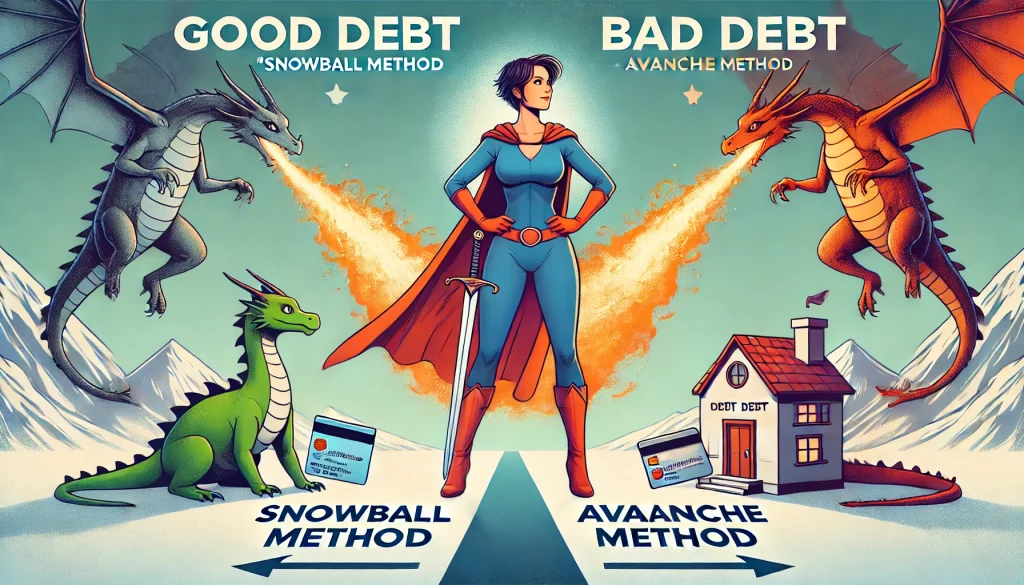
Slaying the debt dragon

Strategy 1: The Snowball Method

This approach involves paying off your smallest debt first, then moving on to the next smallest, and so on. The idea is to build momentum and motivation by quickly eliminating entire debts.

Strategy 2: The Avalanche Method

This method focuses on paying off the debt with the highest interest rate first, then moving to the next highest. It’s mathematically the most efficient way to reduce your overall interest payments.

5. Tale of Two Moms: Sarah’s Snowball vs. Lisa’s Avalanche

Let’s look at two hypothetical moms, Sarah and Lisa, who have the exact same debts but choose different payoff strategies:

Their debts:

  1. Credit card: $5,000 at 18% APR
  2. Personal loan: $3,000 at 12% APR
  3. Car loan: $10,000 at 6% APR
  4. Student loan: $15,000 at 4% APR

Sarah’s Snowball Approach:

Sarah decides to use the snowball method. She pays off the 

3,000 personal loan first, then the 5,000 credit card, followed by the car loan, and finally the student loan. This gives her quick wins and boosts her motivation.

Lisa’s Avalanche Approach:

Lisa opts for the avalanche method. She tackles the 18% credit card debt first, then moves on to the 12% personal loan, followed by the car loan, and lastly the student loan. This approach saves her more money in interest over time.

Both strategies can be effective – the key is choosing the one that aligns best with your personality and financial situation.

6. Empowering Yourself: Your Debt-Free Journey Starts Now

Remember, moms, identifying bad debt and choosing a payoff strategy are just the first steps in your journey to financial freedom. The most important thing is to start and stay committed to your plan.

As you embark on this journey to get out of debt, remember that you’re not alone. Many moms have walked this path before you and succeeded. You have the strength, determination, and love for your family to make it happen too.

My husband often reminds me that financial empowerment is about more than just numbers – it’s about taking control of your life and creating a better future for your family. So take a deep breath, put on your superhero cape (we know you have one!), and get ready to start slaying the debt dragon.

You’ve got this, mama! Your debt-free future is waiting, and it’s going to be amazing.

Face the Debt Monster: An Empowered Approach for Moms (Part 1)

Being a stay-at-home mom is an incredibly rewarding role, yet it comes with its own set of challenges—for now we will focus on financial ones. Many of us are managing the household finances while trying to remain at home to nurture and support our families. Tackling debt can sometimes feel like grappling with a monster, but rest assured, there are smart, strategic ways to slay this beast. Let’s walk through this journey together, keeping in mind both the potential good in certain debts and the personal growth that this process can bring. Let’s face the debt monster.

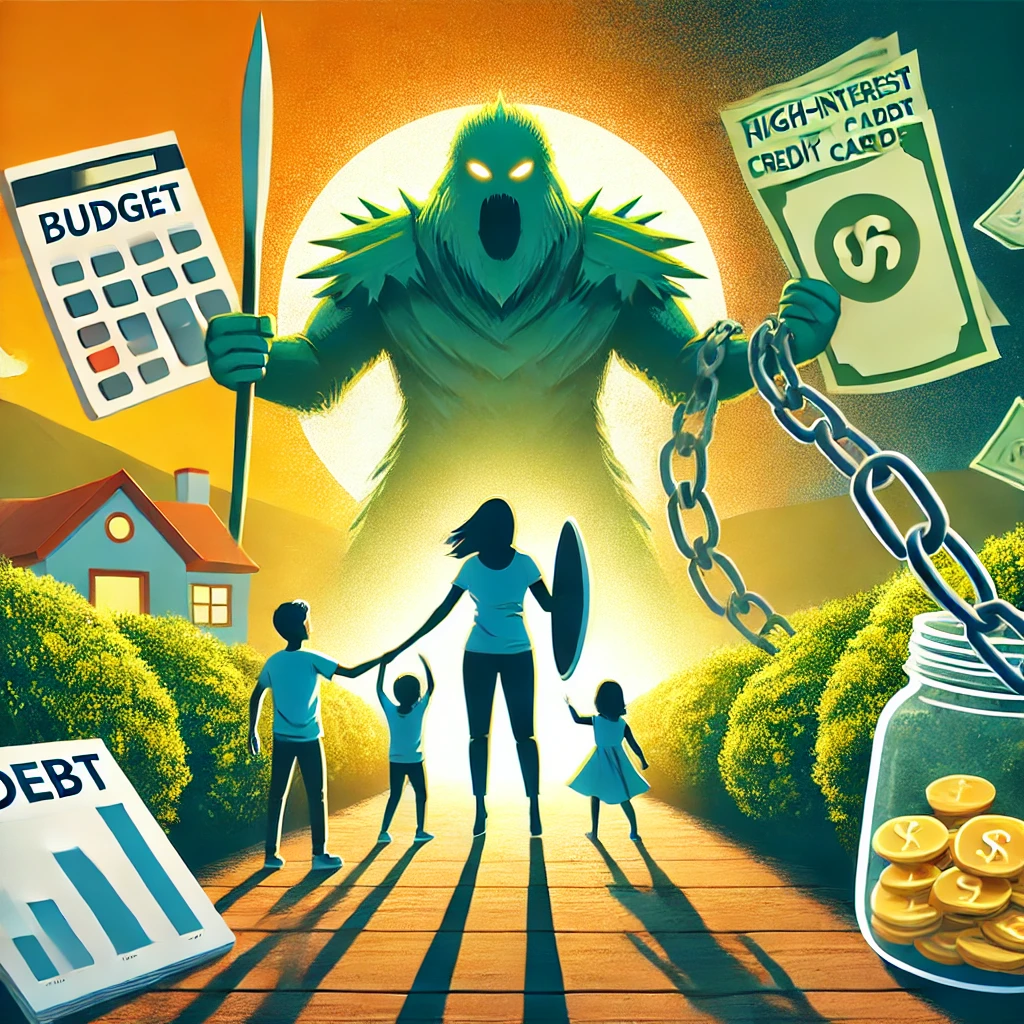
This image shows a mom protecting her family ready to face the debt monster.

Understanding Good vs. Bad Debt: A Necessary Distinction

Just like there are no-one-size-fits-all parenting styles, the same goes for handling debt. Some debt can be beneficial, aiding our long-term goals, while other debt is better left undone. It’s essential to recognize which is which when strategizing your personal finance plan.

A home mortgage with favorable terms or a business loan with a solid expansion plan can be considered “good” debt because they’re investments in your future. Conversely, high-interest credit card debt and other consumer credit should be avoided or minimized. As my husband always stresses, it’s crucial to separate the wheat from the chaff.

He also emphasizes that any debt above the prime rate should be scrutinized, unless it is temporary and will transition into more favorable terms. Credit card balances, store lines of credit, and using a HELOC as if it were a credit card are all part of the “bad debt” category. They can disturb your peace of mind and impact your ability to sleep better at night.

Starting the Personal Finance Journey: Setting the Stage

Embarking on this journey of getting out of debt is much like the start of a new chapter in life. It’s an opportunity for personal growth, a chance to transform not only how you manage finances but also how you perceive money. Think of it as planting seeds for your family’s financial future.

The first step involves taking stock of your existing debts and categorizing them as good or bad. Understand the interest rates and how much you’re losing—or potentially gaining—over time. This assessment will be the foundation upon which your entire debt management strategy rests.

Using anecdotes from other moms can be particularly helpful. I remember chatting with a friend who managed to transform her financial situation through discipline and smart planning. Her story of turning chaos into clarity inspired me to pursue my financial goals with much more confidence and determination.

Two-Pronged Approach: Consolidate and Conquer

While there are numerous strategies out there, I believe in a focused, two-pronged approach: debt consolidation paired with disciplined payoff strategies to face the debt monster. If your credit is in decent shape, consider consolidating high-interest debt into a lower-interest one or using low/0% balance transfer options. This shouldn’t be an excuse to spend more, but rather a tool to channel more funds into debt repayment.

The beauty of debt consolidation is that it simplifies your financial scenario. Instead of juggling various payments, you can focus on a single or fewer accounts, making it easier to stay on top of your financial obligations.

Next comes discipline. Redirect the money you save from lower interest rates towards paying off the consolidated debt faster. Keep tackling those high-interest debts first before they accumulate even more burdening interest. One mother I know used this method, and the relief she felt afterward was palpable. Knowing she had this buffer allowed her to sleep better at night, free from the anxiety of mounting bills.

The Power of the Snowball: It’s All About Momentum

Once you’ve begun chipping away at your debts and face the debt monster, it’s time to put the snowball method into action. As you clear smaller debts, use the freed-up cash to continue tackling the next one. The idea is to gain momentum, reinforcing good financial habits that will lead to long-term stability.

This method fosters a sense of achievement. By witnessing your progress, no matter how small, you stay motivated to continue pressing forward. The initial hurdles might seem significant, but by the time you arrive at larger debts, you’ll possess confidence and clear strategies to tackle them head-on.

From personal experience, I found that seeing smaller victories made the larger goals seem much more achievable. It’s like watching your children take their first steps—progress builds with each moment of success.

Stop at “Good Debt” and Invest in Peace

When you’ve managed to clear out all the “bad” debt, take a breath. If you’re left with only good debt, such as a mortgage or a low-rate auto loan, it’s okay to pause. Understanding that not all debt is detrimental allows you to invest your resources wisely.

Instead of funneling every spare penny into more repayments, consider investing. Set up an emergency fund that can cushion your household in case of unexpected financial events. Begin contributing to your or your spouse’s 401K, especially if the employer matches contributions. This step is vital, as you’re investing in your future stability and peace of mind.

In the end, the goal isn’t just to face the debt monster and be free of debt but to enter a state of financial neutrality where you’re no longer drowning, but comfortably afloat. This will give you the breathing room you—and your family—need.

The Path Forward: Building Your E-Fund

The final piece of this initial financial puzzle is constructing a cushion, the emergency fund. This fund will act as a life jacket in turbulent financial seas, providing the security to not just survive but to thrive.

Bear in mind that the journey to financial freedom is ongoing. It requires continuous learning, adaptability, and above all, a mindset shift towards growing and nurturing your financial health. We’ll delve deeper into how to build that emergency fund in our upcoming discussions, but for now, rest easy knowing you’ve already made significant strides on this journey.

Step by step, together we are shaping a future filled with security, growth, and empowerment for ourselves and our families. So brace yourself for next time, when we continue this personal finance journey by focusing on emergency funds to help you sleep better at night.

Financial Freedom for Moms:

A Step-by-Step Guide to Reclaiming Your Financial Future

Embracing the Journey to Financial Freedom

Hey there moms! I’m so excited to kick off this series of Financial Freedom for Moms with you, and I want to start by saying that I truly understand the overwhelming feeling of being stuck in a financial mess. Trust me, I’ve been there, and it’s not a fun place to be. But here’s the good news: there’s a way out, and I’m here to guide you through it, step by step.

Before we dive in, I want to give a shoutout to my amazing husband who’s been instrumental in helping me put this series together. His support and expertise have been invaluable, and I’m grateful to have him by my side on this journey. Now, let’s get started on your path to financial independence!

Tackling the Debt Monster

The first major step in our financial makeover is addressing those ugly debts that keep us up at night. Whether it’s credit card balances, a subprime mortgage, or an auto loan that’s dragging you down, it’s time to face them head-on. We’ll be exploring strategies to reduce, restructure, or otherwise tackle bad debts in future articles, but for now, take a deep breath and know that there are solutions out there.

Remember, getting out of debt isn’t just about numbers on a page – it’s about reclaiming your peace of mind and setting the stage for future financial growth. By taking this crucial first step, you’re already on your way to a brighter financial future.

Building Your Financial Safety Net

Once we’ve got a handle on our debts, it’s time to focus on creating a financial cushion. Think of this as your personal safety net – a buffer between you and life’s unexpected curveballs. We’ll start small, aiming for that first $1,000 in savings, then gradually work our way up to one month’s living expenses, and eventually, three months’ worth.

This emergency fund is your ticket to financial peace of mind. It’s what allows you to breathe easier when unexpected expenses pop up, knowing you’ve got it covered. And here’s a pro tip: if your employer offers a 401(k) match, make sure you’re capturing that free money first – it’s like giving yourself an instant raise!

Investing in Your Future

Once we’ve tackled debt and established our safety net, we can start focusing on the exciting part – growing our wealth through investing. This is where the magic of compound interest comes into play, helping our money work harder for us over time. We’ll explore different strategies based on your age, risk tolerance, and personal goals, always keeping in mind the importance of balancing growth with stability.

Investing might seem intimidating at first, but I promise you, it’s not as complicated as it seems. We’ll break it down into manageable steps, and before you know it, you’ll be confidently making decisions that set you up for long-term financial success.

Redefining Your Relationship with Money

Now, I know what you might be thinking – “This all sounds great, but where do I even start?” The truth is, most of us weren’t taught financial literacy growing up, and that’s okay. The important thing is that you’re here now, ready to make a change.

Start by taking a hard look at your expenses. We all have things we could cut if we absolutely had to – subscriptions we don’t use, impulse purchases we could do without. Tally up those costs and ask yourself: where could that money be better spent to truly increase YOUR happiness? Remember, this journey isn’t about deprivation – it’s about aligning your spending with your values and long-term goals.

Financial Freedom for Moms

You’ve got this, mama! I know it might feel overwhelming right now, but I promise you, taking control of your finances is one of the most empowering things you can do for yourself and your family. We’re in this together, and I’ll be here every step of the way, cheering you on and providing the tools and knowledge you need to succeed.

So take a deep breath, give yourself a pat on the back for taking this first step, and get ready to transform your future by gaining your financial freedom. You’re capable of amazing things, and I can’t wait to see you thrive!